
Calf Training Explained: How to Build Bigger Calves
The science of calf training, muscle growth, and what actually works
Jump to Section:
1. How to Build Bigger Calves (Quick Answer)
2. Calf Anatomy: Gastrocnemius vs Soleus
3. Fiber Type Composition of the Calves
4. What Actually Builds Calf Muscle
5. The Role of Muscle Length in Hypertrophy
6. Exercise Selection: What You Really Need
7. Training Frequency and Recovery
9. Common Mistakes in Calf Training
The science of calf training, muscle growth, and what actually works
Calf training is often overcomplicated.
Some people think you need endless variation. Others blame genetics. And many get stuck debating which exercise is “best” instead of focusing on what actually drives muscle growth.
The result?
A lot of effort… with very little progress.
The truth is simpler.
Building bigger calves comes down to a few key principles: mechanical tension, full range of motion, progressive overload, and consistency over time. Once those are in place, exercise selection becomes a secondary detail—not the main driver.
This guide breaks down exactly how calf training works, based on current research and practical hypertrophy principles.
1. How to Build Bigger Calves (Quick Answer)
To build bigger calves, focus on:
→ Full range of motion with a deep stretch
→ Progressive overload over time
→ Training 2–4 times per week
→ Standing calf raises as your main exercise
→ Optional: seated calf raises for additional soleus volume
Calf growth is driven by mechanical tension and consistency, not exercise variety.
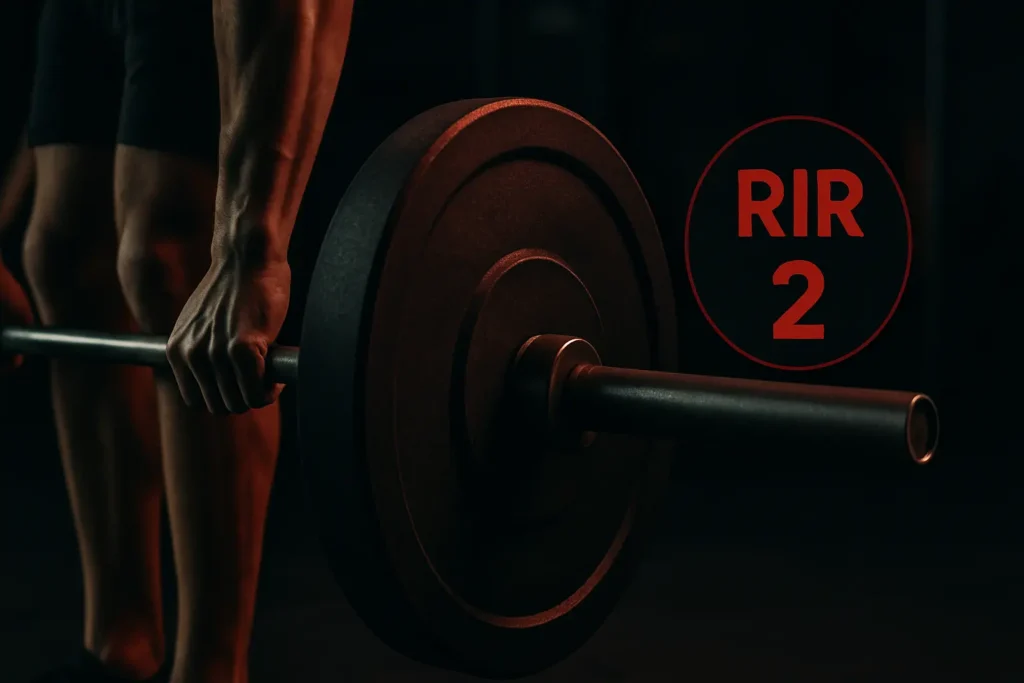
Learn to master your intensity with rir↓
2. Calf Anatomy: Gastrocnemius vs Soleus
The calves are made up of two primary muscles:
Gastrocnemius (the visible, upper portion)
Soleus (the deeper muscle underneath)
The key difference lies in their structure:
Gastrocnemius crosses both the knee and ankle joint
Soleus only crosses the ankle joint
This affects how each muscle is loaded during different movements, but more importantly, it explains why calf training can feel inconsistent if not approached correctly.
3. Fiber Type Composition of the Calves
Muscle fiber type influences how a muscle responds to training.
Soleus composition:
~70–90% slow-twitch fibers (type I)
Highly fatigue-resistant
Designed for endurance and constant use (walking, standing)
Gastrocnemius composition:
More mixed fiber composition (~50/50)
Capable of higher force production
More responsive to heavier loading
This is one reason calves often tolerate higher frequency, but still require sufficient load and effort to grow.
4. What Actually Builds Calf Muscle
Calves grow from the same principles as every other muscle group.
The primary driver is:
Mechanical tension:
The force experienced by muscle fibers during resistance training.
For calves, this means:
→ Using enough load
→ Training close to failure
→ Maintaining controlled, consistent execution
Burn, pump, and soreness are not reliable indicators of growth.
What matters is whether the muscle is exposed to high levels of tension over time.
5. The Role of Muscle Length in Hypertrophy
One of the most consistent findings in hypertrophy research is:
Muscles tend to grow more when trained in a lengthened position
For calves, this is critical.
A proper calf raise should include:
A deep stretch at the bottom (heel drop)
A controlled transition out of that stretch
Full contraction at the top
This bottom position is where the calf experiences the most tension.
If you shorten the range of motion, you reduce the stimulus.
6. Exercise Selection: What You Really Need
This is where most confusion happens.
People often ask:
“Which calf exercise is best?”
The better question is:
“Does the exercise allow full range of motion, sufficient load, and progression?”
Standing calf raises:
Train both gastrocnemius and soleus
Allow high loading
Provide strong hypertrophy stimulus
Seated calf raises:
Provide additional soleus emphasis
Useful for extra volume
Not strictly necessary
Key takeaway:
You can build impressive calves with just one well-executed movement.
Standing calf raises alone can cover most needs—if performed correctly.
Adding variation can help, but it is not the main driver of growth.
7. Training Frequency and Recovery
Calves are active throughout the day, which gives them a higher baseline level of conditioning.
This often allows for:
→ Higher training frequency
→ Faster perceived recovery
A practical range:
2–4 times per week (minimum)
Up to higher frequency depending on volume and intensity
However, recovery still depends on:
Load
Proximity to failure
Total weekly volume
More is not always better—but calves often tolerate more than other muscle groups.
Beginner's gym guide - basics you need to know↓

8. Sets, Reps, and Effort
Calves respond well to a variety of rep ranges.
Practical structure:
6–10 reps (heavy sets)
10–20+ reps (volume work)
More important than reps is effort.
Training should generally be:
→ Close to failure (0–2 RIR)
This ensures sufficient motor unit recruitment and mechanical tension.
Without enough effort, even high volume will not produce significant growth.
9. Common Mistakes in Calf Training
Most people do not fail because of exercise selection.
They fail because of execution.
Common mistakes:
Short range of motion
No pause in the stretched position
Bouncing out of the bottom
Too little load
No progression over time
These reduce tension and limit hypertrophy.
10. AntiWeak’s Perspective on Calf Training
At AntiWeak, we keep calf training simple.
We prioritize:
Mechanical tension over exercise variation
Full range of motion over ego lifting
Progressive overload over random workouts
You do not need a complex routine.
You need:
→ A movement you can repeat consistently
→ Enough load to challenge the muscle
→ A clear progression strategy
That is what builds muscle.
11. Final Thoughts – Build Calves the Right Way
Calf training does not need to be complicated.
If you want results, focus on the fundamentals:
Train consistently
Use full range of motion
Apply progressive overload
Train close enough to failure
Be patient over time
Calves are not special.
They follow the same rules as every other muscle.
Respect those rules – and they will grow.